March 15, 2026
5 Min Read
The Coming “Log4j Moment” for AI

Ronan Fagan
Principal Field Engineer

In December 2021, the software industry experienced one of the most chaotic security events in recent memory: the Log4j vulnerability.
Log4j is a widely used Java logging library that had quietly become embedded in thousands of applications across the internet. Within hours of its disclosure, security teams around the world were scrambling. Not because they didn’t know what Log4j was. Most had heard of it. They immediately understood how serious it was and many suspected it existed somewhere in their environments.
But understanding the vulnerability wasn’t the hardest part.
The real problem was visibility.
Security teams suddenly needed answers to questions they could not quickly resolve:
For many organizations, it took days or even weeks just to answer the most basic question: Where do we even have Log4j?
The crisis exposed a truth the industry had quietly ignored for years. Modern software environments had grown so complex that many organizations no longer had a clear inventory of the components running inside their own systems.
And now, we’re repeating that mistake with AI.
AI is being deployed faster than almost any technology before it.
Employees are experimenting with tools like ChatGPT, Claude, Gemini, and GitHub Copilot. Companies are rolling out internal AI assistants. SaaS platforms are rapidly embedding generative AI features directly into existing products and workflows.
Meanwhile, developers are integrating models, APIs, vector databases, agent frameworks, and retrieval pipelines into applications across the enterprise.
From a productivity perspective, the momentum is undeniable.
But from a governance perspective, something familiar is happening.
Ask a typical security team a simple question: Where exactly are all the AI models running in your environment?
Most organizations cannot answer with confidence.
They may know the tools that have been officially approved. But that rarely reflects reality.
In practice, it’s much harder to know:
Ai is spreading across organizations faster than traditional governance processes can track.
This is the Log4j problem all over again.
At some point, a widely used AI component will have a critical security issue.
It might involve a model itself. It could be prompt-injection bypass, a compromised agent framework, or a poisoned training datasheet. Security researchers are already identifying these kinds of vulnerabilities in modern AI systems.
It could also be an inference API used by thousands of applications, or a library quietly embedded inside popular AI tooling.
Whatever the trigger, the moment will eventually arrive when security teams need immediate answers.
And when it does, security teams will ask the same question they asked in 2021: Where do we have this running?
Without visibility, the response will look a lot like the early days of Log4j. Teams will start emailing developers, searching code repositories, reviewing infrastructure configurations, and manually checking SaaS integrations. Security engineers will try to reconstruct AI usage from logs, API calls, and fragmented documentation.
And even after days of investigation, they still won’t be completely sure.
One challenge with AI systems is that they don’t behave like traditional software components.
Code scanning and Software Bills of Materials (SBOMs) analysis still matter, but they only capture part of the picture.
Many AI models are accessed through APIs rather than embedded directly in code. Others are hidden inside SaaS platforms that incorporate AI features internally. Agent frameworks may dynamically choose which models to call. Providers may swap model versions behind the scenes without customers realizing it.
In many cases, the model that introduces risk never appears in your codebase at all.
The vulnerability exists entirely at runtime.
Which means traditional software inventory approaches will always be incomplete.
Avoiding the AI version of the Log4j scramble requires something many organizations still lack: a real-time view of how AI is being used across the enterprise.
That means understanding:
Most importantly, organizations need to know where vulnerabilities exist inside that ecosystem before an incident forces them to find out the hard way.
Singulr was designed to address this visibility challenge.
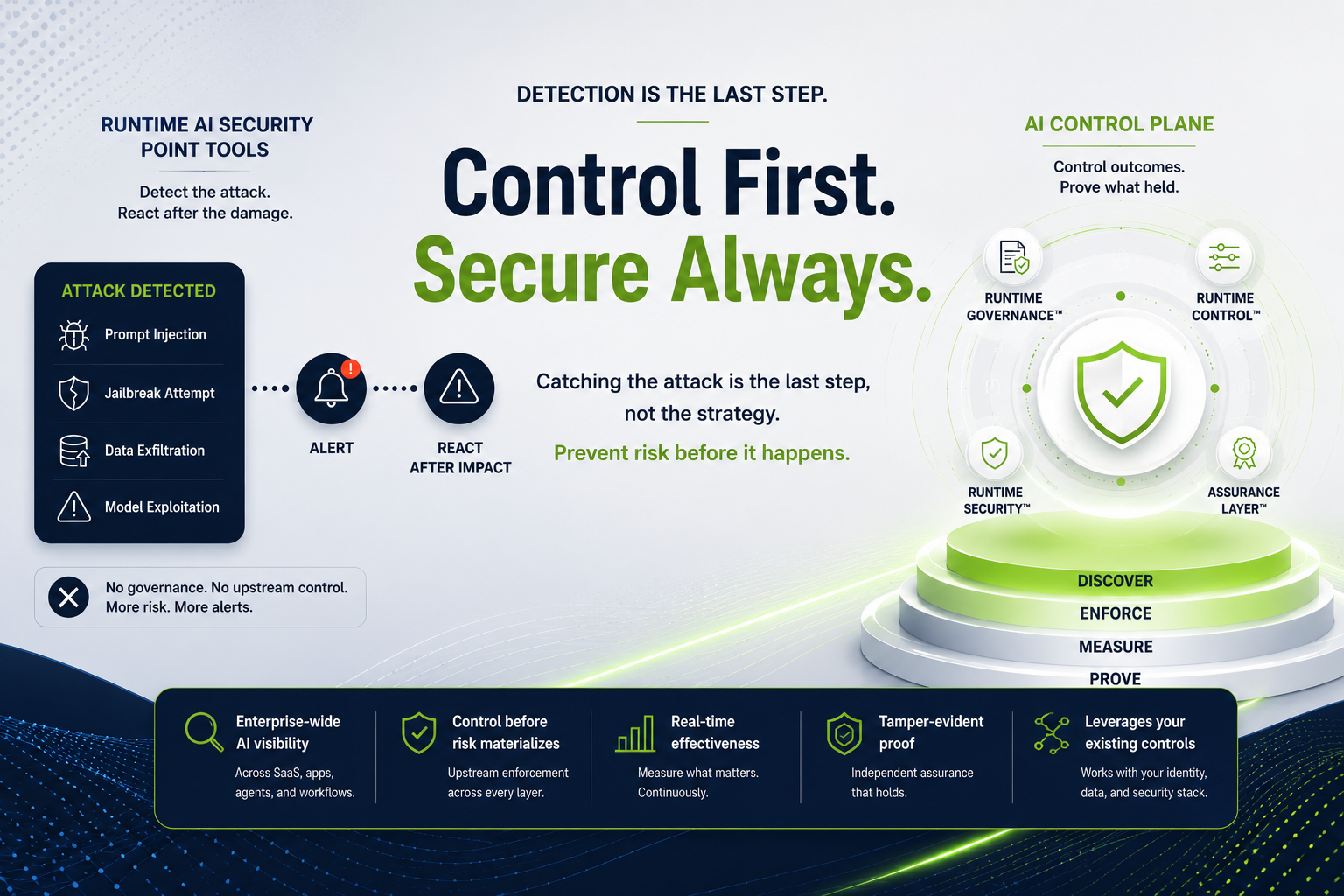
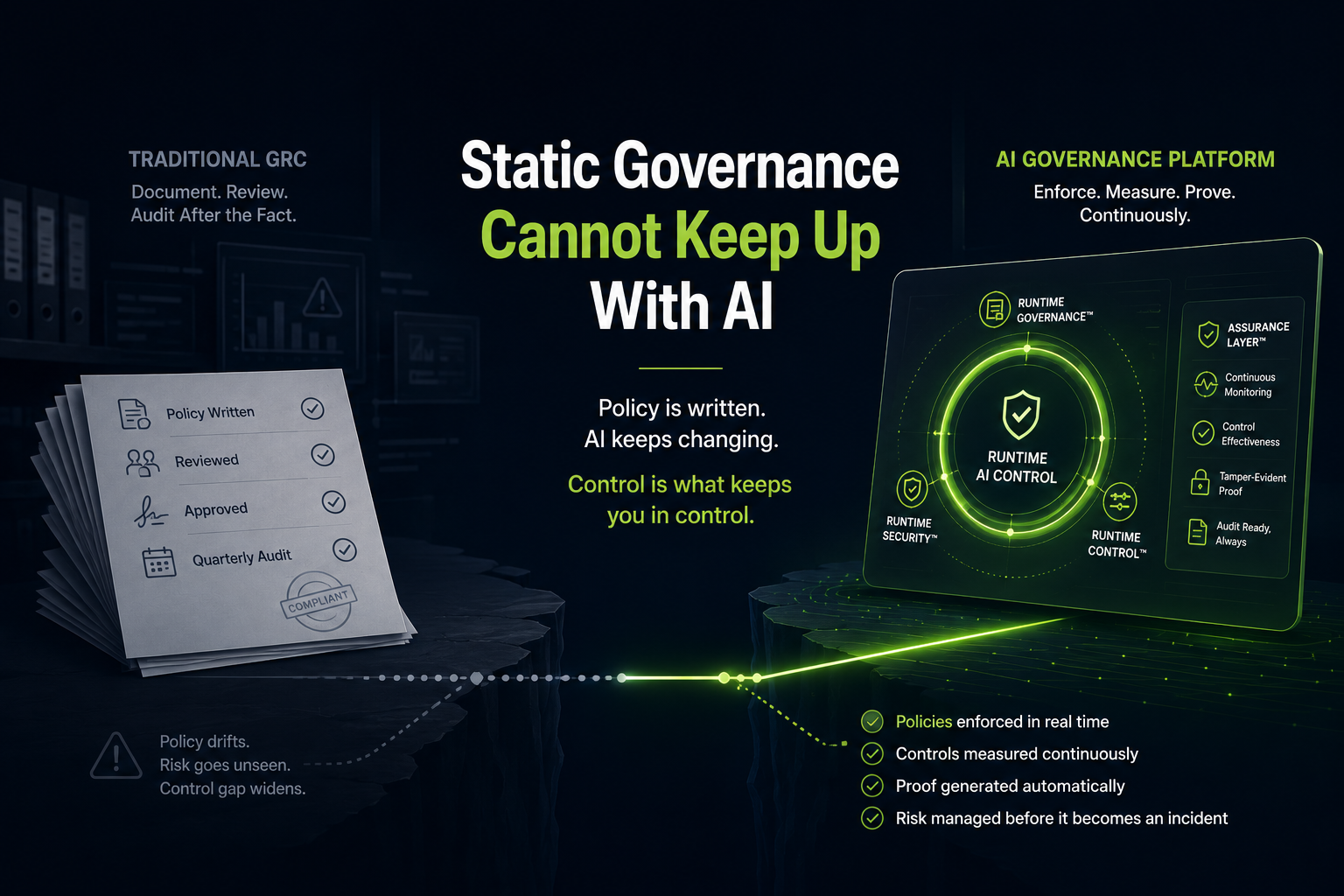
Rather than relying solely on static scans, Singulr maps how AI systemes are actually being used across the enterprise in real time. The platform observes interactions with external AI services, AI features embedded inside SaaS tools, and internally developed agents and applications.
This gives security and governance teams a clear view of where models are being accessed, which versions are active, how users interact with them, and how data flows through AI systems.
When a vulnerability emerges in an AI model or platform, Singulr can immediately identify where that model is being used, which systems rely on it, and which users or applications interact with it or may be affected.
Instead of spending days investigating, teams can quickly understand their exposure and what actions need to be taken.
Log4j was not just a vulnerability. It was a visibility failure.
Organizations struggled not because the flaw was impossible to fix, but because they lacked the ability to quickly understand their own software supply chain.
AI ecosystems are even more complex and dynamic. Models, agents, APIs, and SaaS platforms evolve constantly. Dependencies change, capabilities expand, and usage spreads faster than governance processes can track.
Without visibility, the next major AI vulnerability will produce the same kind of scramble.
The difference this time is that we already know the lesson.
Start with inventory.
Because when the AI equivalent of Log4j arrives, the most important question will still be the same:
Where do we have it?

Complete visibility across all three AI vectors in your environment, including agents and embedded SaaS AI

Singulr Pulse™ intelligence and the live risk signals that feed your control plane

Continuous red teaming, identifying control gaps and vulnerabilities in real time

Singulr Runtime Control™ enforcing governance intent without slowing innovation


.webp)